Liriope's Muse - Tree Care Tips From A Master Arborist
Liriope's Muse - How to Tell When Your Tree Needs Pruning: An Arborist’s Guide
Pruning is one of the most misunderstood parts of tree care. Many companies sell pruning as a way to “storm-proof” a tree or “thin it out so wind can pass through and light can penetrate.” The problem is, those approaches often remove the very structure that helps a tree handle wind loads in the first place.
At Eric Putnam BCMA, Inc., we take a holistic, long-term view: we only remove what’s necessary to meet your goals as the homeowner while protecting the tree. Why? Because every cut stresses the tree and removes years off of it’s lifespan. And every branch removed is lost energy-producing capacity and stored energy reserves.
This blog covers the real signs your tree needs pruning, what responsible pruning looks like, and why we avoid storm pruning and canopy thinning at all costs!
Our pruning philosophy: protect structure, protect lifespan
A healthy tree isn’t just a collection of branches, it’s a living system. The canopy feeds the tree, supports root function, and helps it respond to loads(ex by weather). When unnecessary branches are removed it can stress the tree out on a physiological level, causing the tree to respond with stress growth (like watersprouts), reduced vigor, and greater vulnerability over time to diseases, pathogens, and especially pests.
We also don’t subscribe to “storm pruning.” Trees rely on natural movement and weight distribution to absorb wind energy (mass dampening). Over-pruning can shift the tree’s center of gravity, reduce its ability to flex naturally, and create long-term structural issues. To learn more about a trees natural mass damping capabilities and why it is essential to preserve them, check out this blog !
Bottom line: We prune for tree health, structural integrity, and safety – never for a quick cosmetic result.
1) Dead, dying, or broken branches
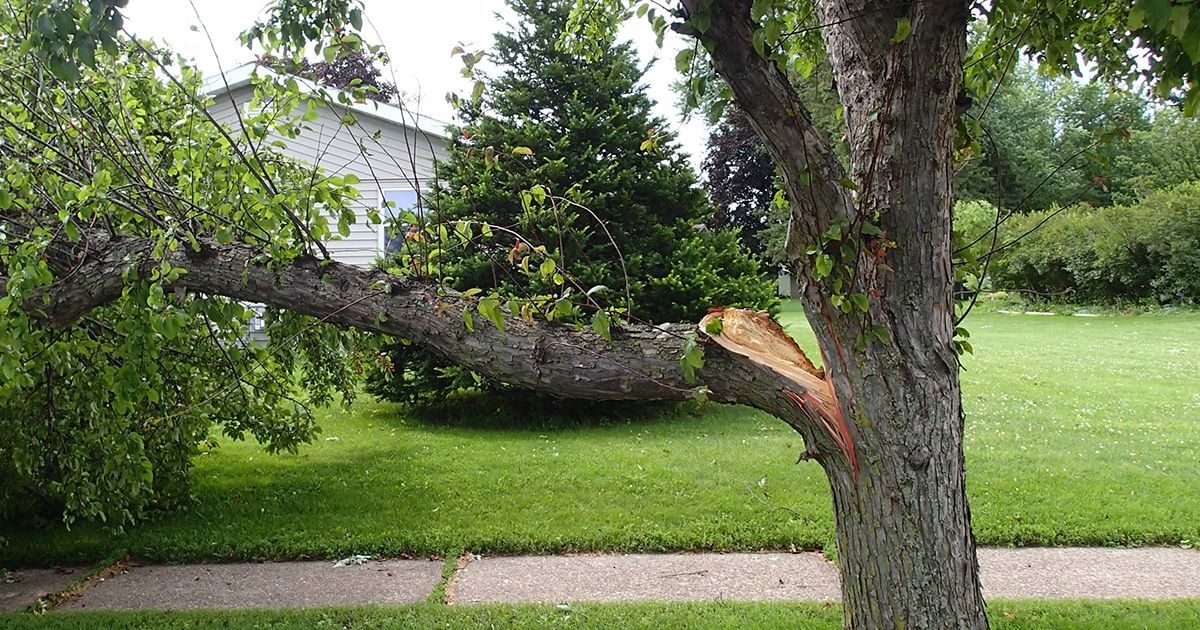
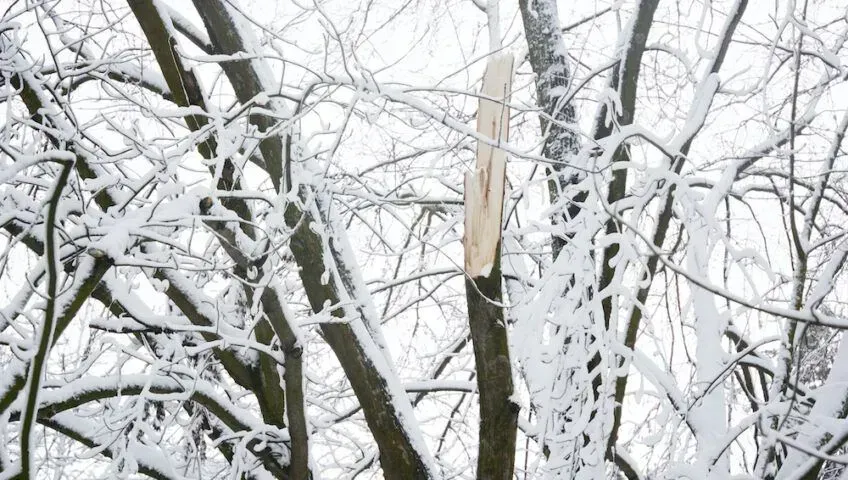
This is the clearest sign pruning is needed. Deadwood doesn’t recover, and it can fail unexpectedly, especially in wind and pose a serious risk to your property and yourself!
Look for:
- Branches with no leaves when the rest of the tree is leafed out
- Hanging limbs, cracked wood, or “half-attached” branches
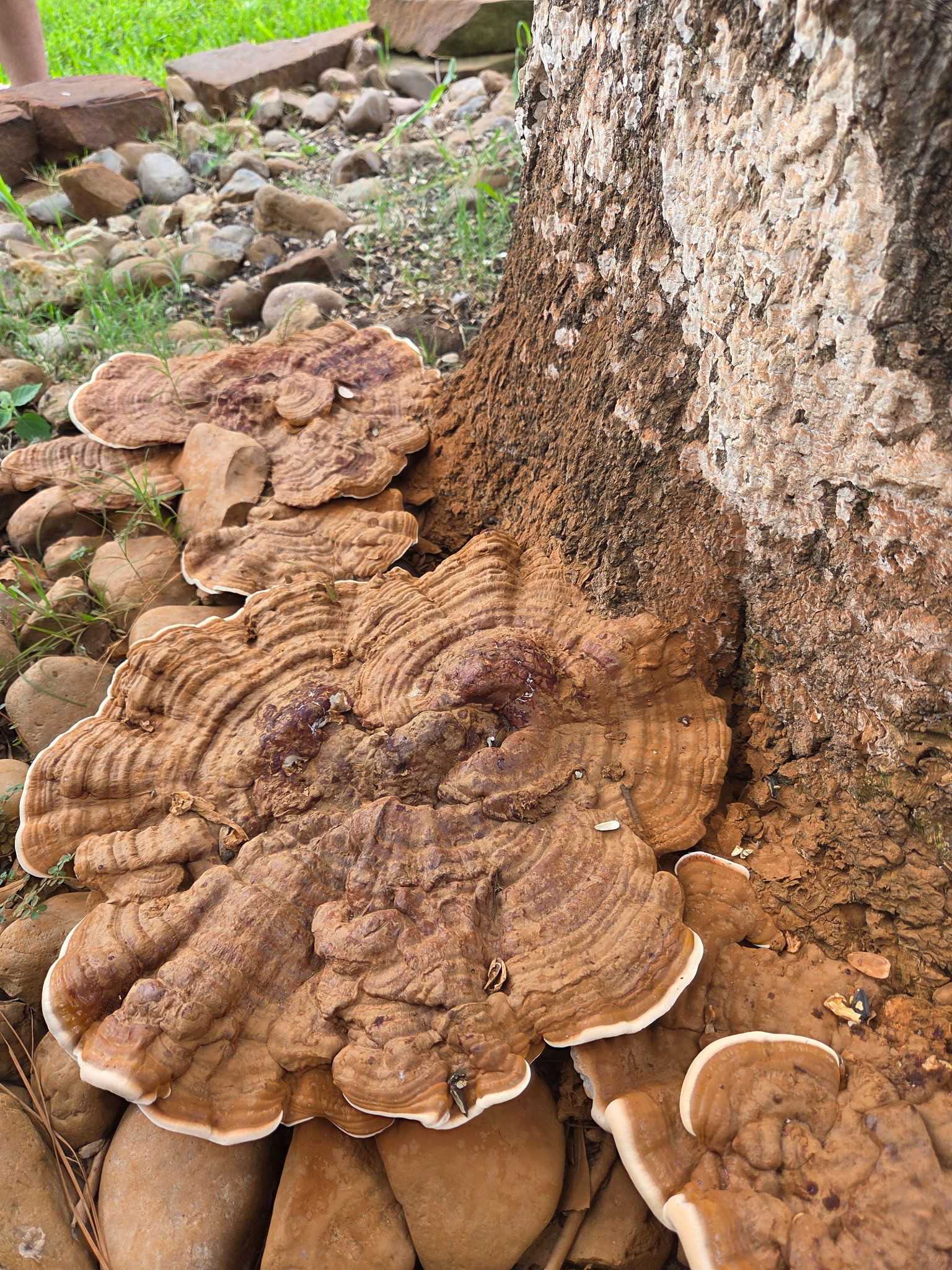
- Mushrooms or soft/crumbly wood on a dead section
- Branch tips that repeatedly die back year after year
Removing deadwood reduces risk without removing the tree’s healthy, functioning canopy. This would just be like trimming the trees hair, it doesn’t cause harm as the cells are dead already!
2) Branches rubbing or crossing
When branches rub and there is constant friction on the bark, they create wounds. These wounds can become entry points for pests, decay organisms, and disease.
Signs to watch for:
- Two structural limbs (not branches) touching and scraping in the wind
- Bark worn smooth in a line where limbs meet
- Tight clusters of competing branches at the same point
Selective pruning here is about preventing future problems with minimal removal, the benefits in this case would outweigh any possible negatives.
It’s important to understand the difference between limbs and branches here, branches, ‘branch’ off of limbs, they are newer growth that still has the ability to adapt and change depending on stimuli(thigmotropism). So, two branches rubbing up against each other may not present an issue, as they still have the ability to grow away from each other in response to that stimulus. Not two limbs rubbing against each other is a different situation entirely and must be addressed, as this can cause serious structural effects on the tree.
3) Low clearance issues over roofs, driveways, sidewalks, and streets
Most of the time pruning isn’t about the tree “needing” it biologically, it’s about the tree needing to be conformed to living in a human environment. An example of this would be a tree growing in or near an urban area.
You may need pruning if branches:
- Hang too low over vehicles or pedestrian areas
- Contact the roof, gutters, or siding
- Obstruct sight lines at corners or driveways
Our approach is to raise clearance strategically, keeping strong, well-spaced limbs and avoiding over-lifting that can destabilize the canopy and cause serious injury. Trees are intelligent beings, they understand if they are being continually pruned in a certain way, such as up and away from a sidewalk, to stop putting branches out in that direction. So, we work to train trees for clearance by strategically removing small branches over time rather than a large essential branch once.
4) A developing structural imbalance
Not every uneven tree is unsafe, trees have a natural ability to adapt to the conditions to they are living in. For example, a tree near a building may develop an outward lean to reach more sunlight (phototropism) or a tree may have slightly fallen over in a storm but the canopy has began to correct itself and grow upwards(geotropism). The key is whether the structure is becoming risk-prone.
Pruning may be appropriate if you notice:
- Long, heavy limbs extending far beyond the rest of the canopy
- A canopy that has become one-sided after past removals or storm damage
- Branches with weak-looking attachments (especially tight “V” angles or multiple watershoots)
- A limb that is clearly overextended and sagging year after year (species dependent and may be mitigated with cabling)
This is where storm-pruning myths can do real harm. Stripping inner canopy or “lion-tailing” can actually make end-weight worse and increase failure likelihood. Instead, we focus on selective reduction only where truly needed.
5) Dense interior growth caused by stress or past over-pruning
Here’s an important distinction: we don’t do “canopy thinning” as a routine service. But sometimes trees produce dense, upright shoots (watersprouts) after:
- Topping
- Storm pruning
- Over-thinning
- Root damage or construction stress
In those cases, selective pruning can help the tree redirect energy into better structure, but it must be done carefully so we’re not repeating the same cycle of stress.
6) Storm damage cleanup (done correctly)
After storms, some pruning may be necessary, but it’s not “storm pruning.” It’s storm cleanup.
Appropriate post-storm pruning includes:
- Removing broken, hanging, or cracked limbs
- Making clean cuts back to suitable branch unions
- Reducing only what is necessary to prevent further tearing
What we avoid is using storms as an excuse to over-remove healthy canopy “just in case.”
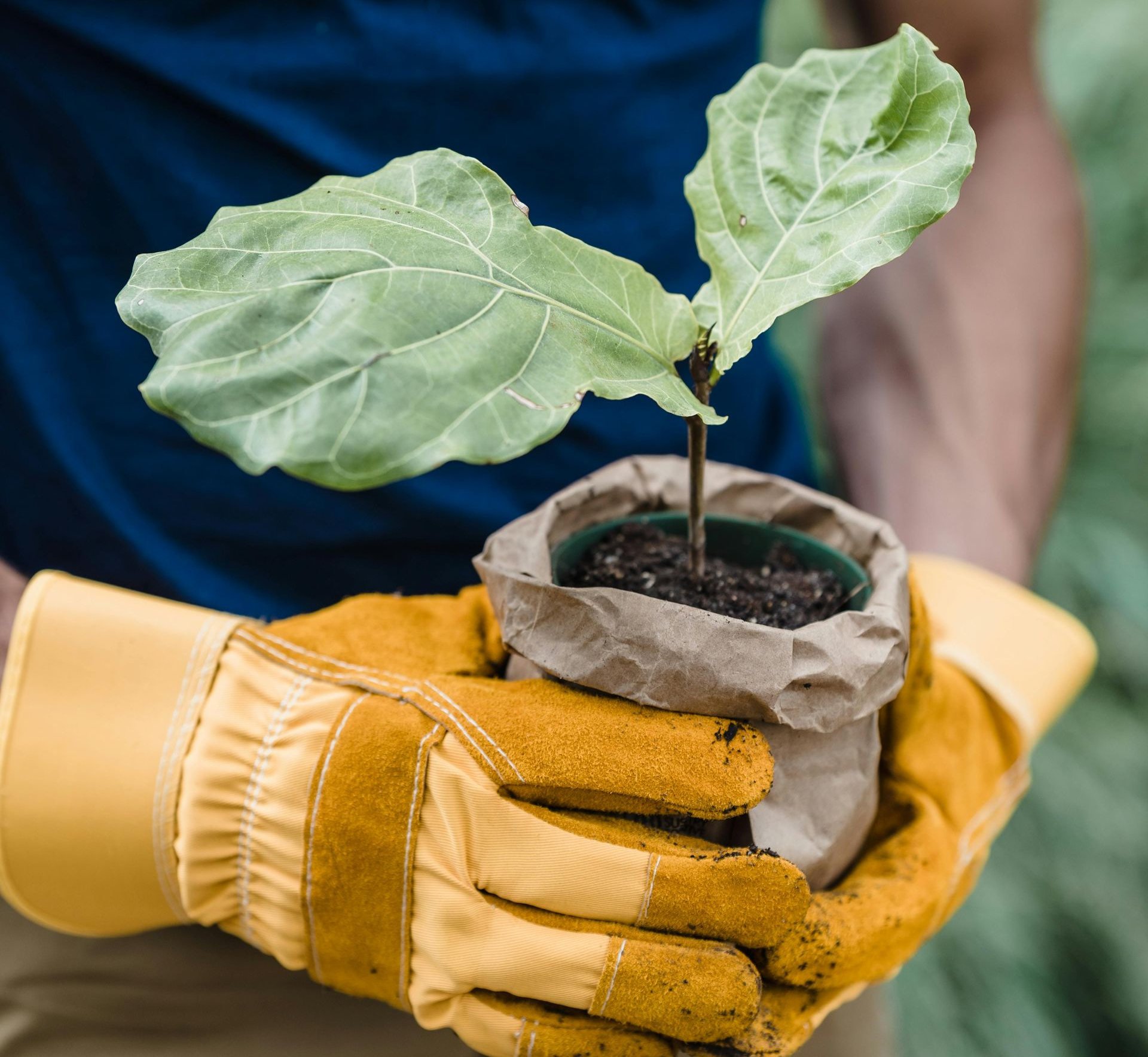
7) The tree is young and needs guidance (the best time to prune)
One of the most valuable, and arguably least discussed, types of pruning is structural training on young trees. Small, early cuts can prevent major issues later.
Young trees benefit from:
- Establishing a strong central leader (when appropriate)
- Preventing co-dominant stems from forming
- Encouraging good limb spacing and attachment angles
Done early, this reduces the need for large cuts later; and helps the tree live a longer, safer life with less need for maintenance and major pruning later in its life.
What you should not request: “thin it out” or “storm-proof it”
If someone recommends heavy thinning or storm pruning as a general solution, be cautious. These practices can:
- Reduce the tree’s energy production
- Trigger stress growth and weak re-growth
- Remove interior structure that stabilizes movement
- Increase end-weight and branch failure over time
- Significantly shorten the tree’s functional lifespan
- Provide an open door for pests and pathogens to enter the tree
A healthy canopy isn’t a problem to “open up.” It’s the tree’s life-support system.
Our promise: minimal cuts, maximum benefit
We prune with restraint and intention. That means:
- Removing dead, damaged, and hazardous growth
- Correcting rubbing/crossing where it matters
- Making the smallest number of cuts needed for safety and health
- Protecting the canopy’s structure, balance, and mass dampening ability
If you’re unsure whether your tree needs pruning, we’re happy to take a look and provide a clear, science-based recommendation free of cost !
Read our Previous Posts!
Liriope’s Muse - Expert Tree Care Tips